Cross-Platform Infrastructure · 2023 — 2025
Unified Cross-Platform
Runtime
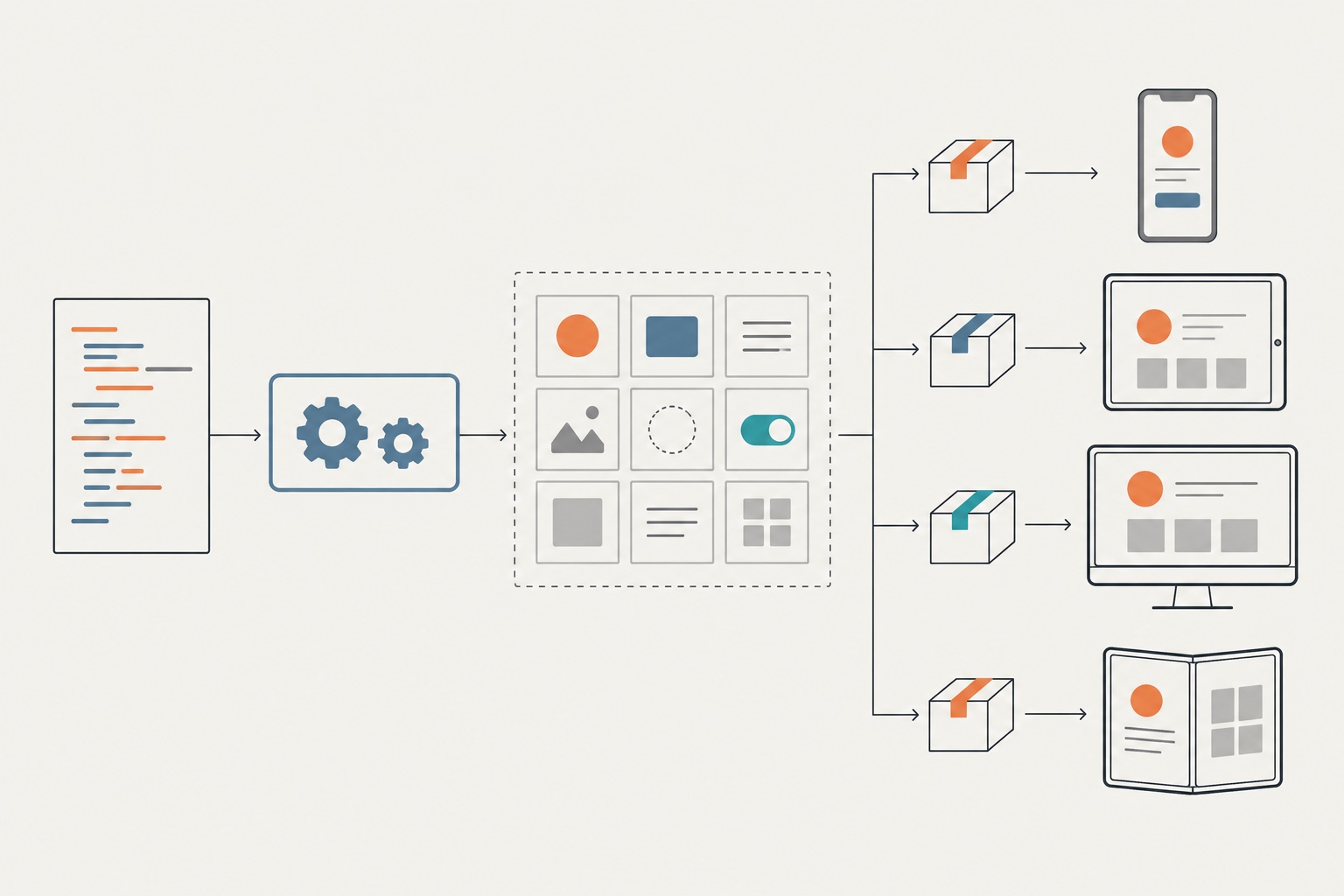
A shared component model, runtime, and engineering system for delivering consistent experiences across iOS, Android, and HarmonyOS.
01
The challenge
Multiple platforms had accumulated multiple ways of building the same thing.
Product teams maintained duplicated implementations, private APIs, and platform-specific workarounds. This raised migration cost, introduced behavioral inconsistencies, and made foundational upgrades increasingly risky across independent apps and more than 100 bundles.
02
The system
Standardize the model, then reinforce it through the delivery lifecycle.
Unified DSL
Helped define a React Hooks-based component model and explicit mappings between logic and rendering layers for consistent behavior across platforms.
Developer tooling
Built CLI capabilities for view-tree inspection, performance benchmarks, package analysis, and on-demand dependency packaging.
Static and runtime controls
Added AST-based CI scanning and runtime reporting to prevent private API usage from returning after teams completed standardization.
Progressive delivery
Connected staged rollout, error and blank-screen monitoring, automated alerts, and emergency rollback into one operational feedback loop.
03
Delivery model
Author once
Shared DSL & Components
Build with confidence
CLI · AST Gates · Benchmarks
Run everywhere
iOS · Android · HarmonyOS
04
The outcome
A migration program became a durable engineering system.
The platform reached 95% standardization, prevented new non-standard API usage through CI/CD gates, reduced JavaScript crashes by about 60%, and cut bundle size by roughly 15%. The unified card model also reduced integration effort by around 50% and supported on-time HarmonyOS delivery.