Unified DSL
Helped define a React Hooks-based component model and explicit mappings between logic and rendering layers for consistent behavior across platforms.
Cross-Platform Infrastructure / 2023 — 2025
A shared component model, runtime, and engineering system for delivering consistent experiences across iOS, Android, and HarmonyOS.
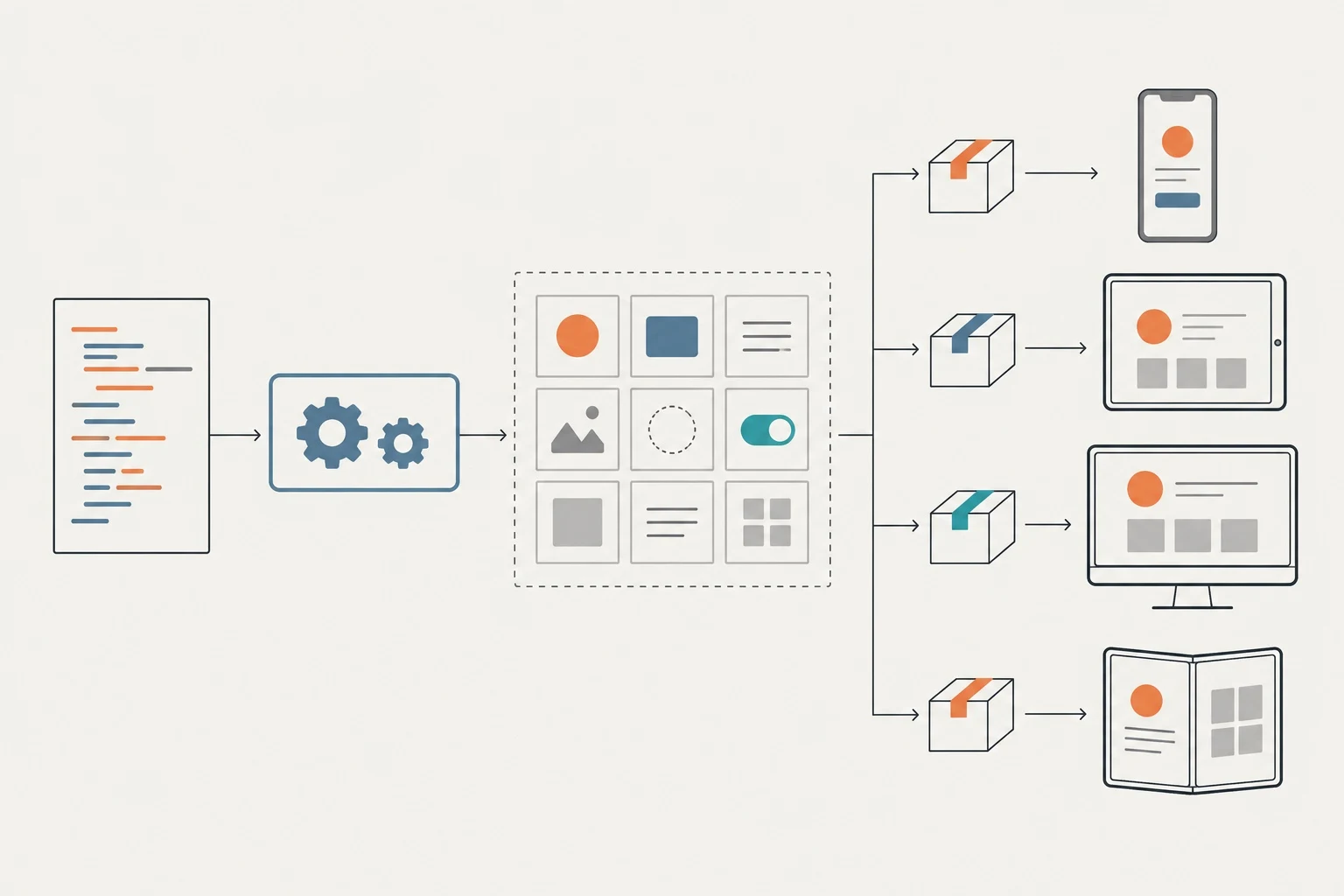 ONE MODEL. MANY POSSIBILITIES.
01 / THE CHALLENGE
Product teams maintained duplicated implementations, private APIs, and platform-specific workarounds. This raised migration cost, introduced behavioral inconsistencies, and made foundational upgrades increasingly risky across independent apps and more than 100 bundles.
02 / THE SYSTEM
Helped define a React Hooks-based component model and explicit mappings between logic and rendering layers for consistent behavior across platforms.
Built CLI capabilities for view-tree inspection, performance benchmarks, package analysis, and on-demand dependency packaging.
Added AST-based CI scanning and runtime reporting to prevent private API usage from returning after teams completed standardization.
Connected staged rollout, error and blank-screen monitoring, automated alerts, and emergency rollback into one operational feedback loop.
04 / THE OUTCOME
The platform reached 95% standardization, prevented new non-standard API usage through CI/CD gates, reduced JavaScript crashes by about 60%, and cut bundle size by roughly 15%. The unified card model also reduced integration effort by around 50% and supported on-time HarmonyOS delivery.